Choosing the correct math league past papers is often more critical than simply solving them. Many students struggle because they practice materials that do not reflect the specific problem styles or difficulty curves of their upcoming contests. With the 2026-27 season underway, understanding how to curate your practice set ensures efficient preparation.
Understanding the Regional Context
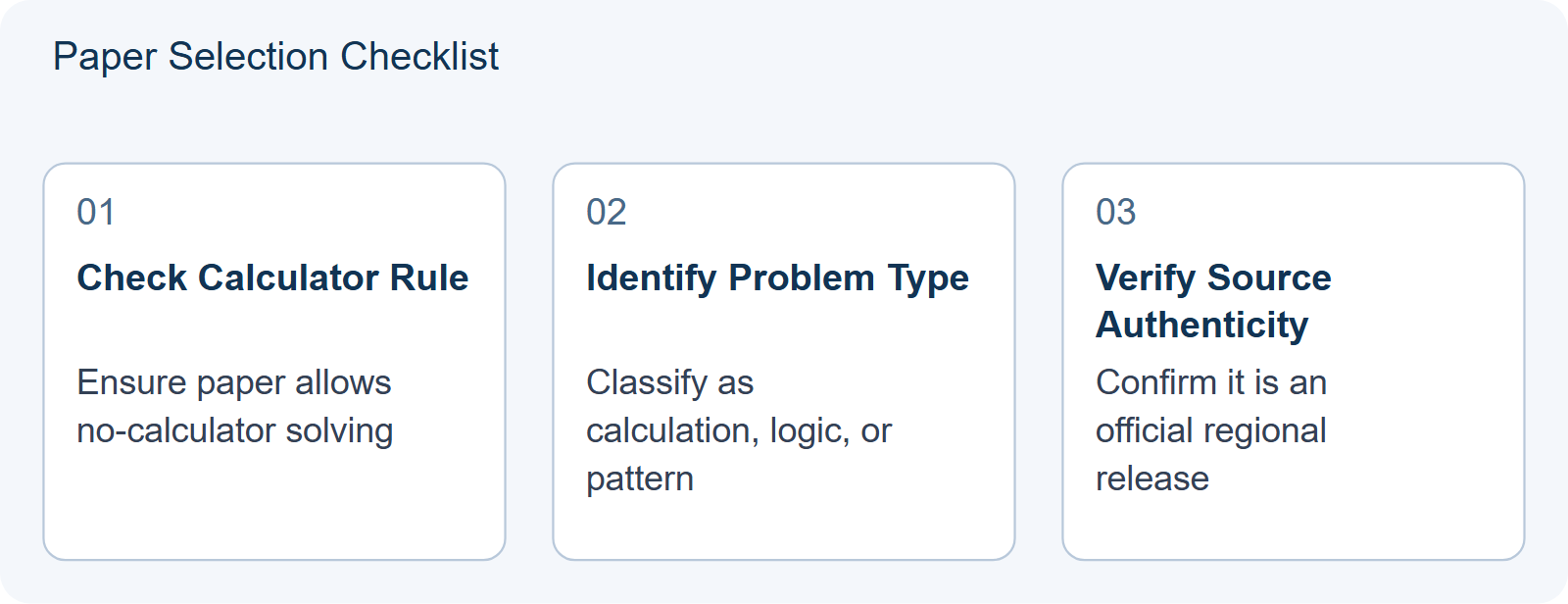
For students in the Asia-Pacific region, including China, the primary reference point is Math League Preliminary Round 2026-27. The official regional site, mathleague.world, provides specific guidelines for the preliminary round. It is crucial to note that calculators have been prohibited in Math League contests since September 2026. This rule change significantly impacts which past papers are relevant. Older materials that assume calculator usage may mislead students about the required mental arithmetic speed and accuracy.
When selecting practice materials, prioritize those that align with the current no-calculator policy. If you are using older archives, manually adjust your approach by forcing yourself to solve problems without computational aids. This builds the necessary stamina for the actual exam conditions described in the Online Preliminary Round guidelines.
- Contest registration
- Free past papers
- 1-on-1 trial lesson

Matching Problem Style to Skill Level
There is no single “grade band” structure universally applied across all Math League events in a way that dictates a rigid curriculum. Instead, focus on the cognitive demand of the problems. Some questions test rapid recall of facts, while others require multi-step logical deduction. A common mistake is practicing only one type. To balance this, consider the following strategy:
| Problem Type | Practice Focus | Recommended Source |
|---|---|---|
| Rapid Calculation | Mental math drills, no calculator | Recent regional prelims |
| Logical Deduction | Step-by-step reasoning checks | Team/Relay formats (past) |
| Pattern Recognition | Sequence and geometry puzzles | Sequences and Patterns |
The 2026 summer programme included individual, team, relay, and speed questions. While these formats prove that collaborative and timed elements exist in the broader Math League ecosystem, they do not necessarily define the standard individual preliminary round. Use team-style problems to enhance communication skills if applicable, but ensure your core practice remains aligned with the individual assessment criteria outlined in the student manual.
Leveraging Score Reports for Targeted Practice
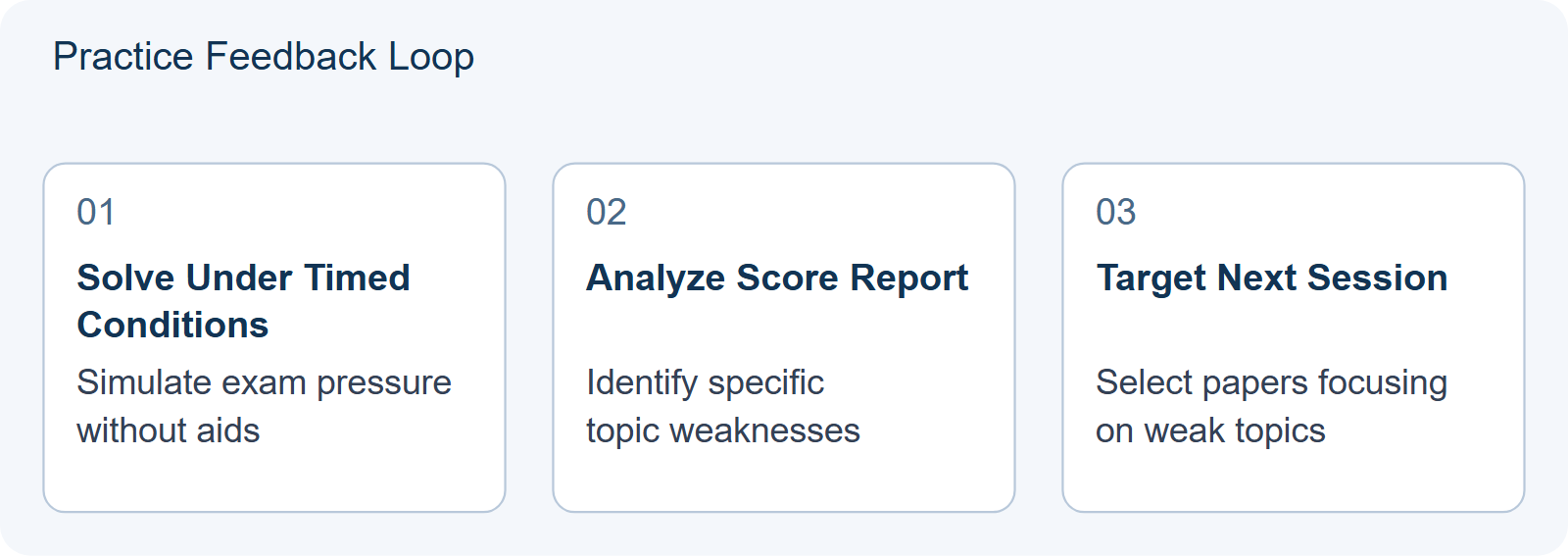
One of the most valuable features of the regional preliminary round is the provision of score reports and targeted practice after the event. As noted in the Grades 1-3 guide, understanding where you lost marks is more important than total score. When choosing past papers, look for those accompanied by detailed solutions or feedback mechanisms. If a paper lacks clear explanations, its value diminishes unless you can independently verify the logic.
Do not rely on external “official download funnels” or unverified third-party packs. The source material does not confirm any specific Hanlin-branded paper pack or exact solution coverage. Instead, build a personal library from verified regional releases. This ensures authenticity and alignment with current rules.
Avoiding Common Pitfalls
Students often fall into the trap of assuming that higher-grade papers are always better practice. However, a Grade 10 student might benefit more from mastering foundational algebraic manipulation found in earlier years if their weakness lies there. Conversely, a younger student should not be discouraged by complex geometry problems if they excel in arithmetic. The key is diagnostic practice.
Additionally, be wary of conflating different competitions. If you are unsure whether you are preparing for Math League or another American-sounding contest, refer to the distinction guide at Math League vs AMC/AMO. Each competition has unique stylistic preferences. Practicing the wrong style wastes time.
Conclusion
Selecting the right math league past papers involves three steps: verifying the no-calculator rule, matching problem types to your weak areas, and utilizing post-contest feedback loops. Avoid unverified grade-band assumptions and focus on the cognitive skills tested in the regional preliminaries. By curating a diverse yet targeted practice set, you prepare effectively for the 2026-27 season.
HYPOTHETICAL/ILLUSTRATIVE: The “Calculator Crutch” Diagnostic Test
To apply the advice on selecting materials that match current no-calculator constraints, consider a specific decision scenario involving two potential practice sets. Imagine a student preparing for the 2026-27 preliminary round who has access to two different archives of past papers. Archive A consists of problems from 2018-2022, where many solutions explicitly show steps using a scientific calculator for complex arithmetic or graphing. Archive B contains problems from 2024-2025, which were administered under stricter mental math expectations, even if the official ban was formalized later.
The core dilemma is not just about difficulty, but about cognitive load management. If the student chooses Archive A, they might find themselves relying on written-out long division or approximation techniques that are inefficient under time pressure. Conversely, Archive B forces immediate recognition of number properties. Let’s compare these choices concretely. In Archive A, a problem might ask for the sum of a series where the solution key suggests using a formulaic approach with calculator verification. This trains the brain to seek external validation rather than internal pattern recognition. In Archive B, the same type of problem likely requires spotting a telescoping pattern or grouping terms mentally to simplify before calculating. The difference is subtle but profound: one builds dependency, the other builds intuition.
What changes this decision? It depends entirely on the student’s current weakness. If diagnostic testing reveals that the student loses points due to slow arithmetic speed, Archive B is superior because it aligns with the stamina required for the actual exam. However, if the student struggles with setting up equations correctly but calculates quickly once set up, Archive A might still be useful for structural understanding, provided the student manually removes the calculator step during practice. The critical factor is whether the material reinforces the specific skill gap identified in previous score reports.
Here is a reusable self-check method to validate your choice before committing to a full paper:
| Checklist Item | Action | Decision Indicator |
|---|---|---|
| Time Trial Simulation | Solve three random problems from the set without any aids. | If you feel stuck waiting for mental calculation, the set may be too advanced for your current speed baseline. |
| Solution Analysis | Read the answer key for a missed problem. | If the solution relies on brute-force computation, discard the set. Look for elegant shortcuts. |
| Pattern Frequency | Categorize the next five problems by type (e.g., logic vs. calc). | If the mix does not reflect your personal weak areas, switch sources. |
This illustrative example highlights that choosing past papers is an active curation process, not a passive download. By prioritizing materials that demand mental agility over computational reliance, students align their preparation with the realities of the modern contest environment. Always verify that the practice style mirrors the cognitive demands of the upcoming season, ensuring that every minute spent solving contributes directly to building the necessary exam-day resilience.
Frequently Asked Questions
Can I use old Math League papers?
Yes, but be cautious. The China-region online preliminary prohibits calculators, so old papers requiring them need adjustment; the US/Canada school contests allow non-QWERTY calculators for 2026-27 and plan a no-calculator policy the next school year. Focus on the logic, not the tool.
Are there specific grade bands for practice?
No universal rigid bands are confirmed in sources. Match papers to your skill gaps (e.g., algebra vs geometry) rather than just your school grade.
Does Hanlin provide official past papers?
The source does not confirm a specific Hanlin paper pack. Use official regional resources and score reports for authentic practice material.